In mathematics, a Markov information source, or simply, a Markov source, is an information source whose underlying dynamics are given by a stationary finite Markov chain. == Formal definition == An information source is a sequence of random variables ranging over a finite alphabet Γ {\displaystyle \Gamma } , having a stationary distribution. A Markov information source is then a (stationary) Markov chain M {\displaystyle M} , together with a function f : S → Γ {\displaystyle f:S\to \Gamma } that maps states S {\displaystyle S} in the Markov chain to letters in the alphabet Γ {\displaystyle \Gamma } . A unifilar Markov source is a Markov source for which the values f ( s k ) {\displaystyle f(s_{k})} are distinct whenever each of the states s k {\displaystyle s_{k}} are reachable, in one step, from a common prior state. Unifilar sources are notable in that many of their properties are far more easily analyzed, as compared to the general case. == Applications == Markov sources are commonly used in communication theory, as a model of a transmitter. Markov sources also occur in natural language processing, where they are used to represent hidden meaning in a text. Given the output of a Markov source, whose underlying Markov chain is unknown, the task of solving for the underlying chain is undertaken by the techniques of hidden Markov models, such as the Viterbi algorithm.
Audio-visual speech recognition
Audio visual speech recognition (AVSR) is a technique that uses image processing capabilities in lip reading to aid speech recognition systems in recognizing indeterministic phones or giving preponderance among near probability decisions. Each system of lip reading and speech recognition works separately, then their results are mixed at the stage of feature fusion. As the name suggests, it has two parts. First one is the audio part and second one is the visual part. In audio part we use features like log mel spectrogram, mfcc etc. from the raw audio samples and we build a model to get feature vector out of it . For visual part generally we use some variant of convolutional neural network to compress the image to a feature vector after that we concatenate these two vectors (audio and visual ) and try to predict the target object.
TAPPS2
TAPPS2 (Technische Alternative Planungs- und Programmier-System) is a tool used for developing the program logic for the universal, heating and solar thermal controllers by Austrian manufacturer Technische Alternative. Its primary usecase is defining the exact reaction of the controller to a certain event. Other than its predecessor, TAPPS, which could only be used to program controllers of type UVR1611, TAPPS2 is mainly used to program the UVR16x2 and RSM610 controllers, as well as several extension modules. == Development == Development in TAPPS2 is done on a vector-based drawing surface using components that can be placed via drag and drop. The components, which can be separated into inputs, functions and outputs are then being connected according to their individual features. Available components vary according to the current solar thermal control unit.
Box blur
A box blur (also known as a box linear filter) is a spatial domain linear filter in which each pixel in the resulting image has a value equal to the average value of its neighboring pixels in the input image. It is a form of low-pass ("blurring") filter. A 3 by 3 box blur ("radius 1") can be written as matrix 1 9 [ 1 1 1 1 1 1 1 1 1 ] . {\displaystyle {\frac {1}{9}}{\begin{bmatrix}1&1&1\\1&1&1\\1&1&1\end{bmatrix}}.} Due to its property of using equal weights, it can be implemented using a much simpler accumulation algorithm, which is significantly faster than using a sliding-window algorithm. Box blurs are frequently used to approximate a Gaussian blur. By the central limit theorem, repeated application of a box blur will approximate a Gaussian blur. In the frequency domain, a box blur has zeros and negative components. That is, a sine wave with a period equal to the size of the box will be blurred away entirely, and wavelengths shorter than the size of the box may be phase-reversed, as seen when two bokeh circles touch to form a bright spot where there would be a dark spot between two bright spots in the original image. == Extensions == Gwosdek, et al. has extended Box blur to take a fractional radius: the edges of the 1-D filter are expanded with a fraction. It makes slightly better gaussian approximation possible due to the elimination of integer-rounding error. Mario Klingemann has a "stack blur" that tries to better emulate gaussian's look in one pass by stacking weights: 1 9 [ 1 2 3 2 1 ] {\displaystyle {\frac {1}{9}}{\begin{bmatrix}1&2&3&2&1\end{bmatrix}}} The triangular impulse response it forms decomposes to two rounds of box blur. Stacked Integral Image by Bhatia et al. takes the weighted average of a few box blurs to fit the gaussian response curve. == Implementation == The following pseudocode implements a 3x3 box blur. The example does not handle the edges of the image, which would not fit inside the kernel, so that these areas remain unblurred. In practice, the issue is better handled by: Introducing an alpha channel to represent the absence of colors; Extending the boundary by filling in values, ranked by quality: Fill in a mirrored image at the border Fill in a constant color extending from the last pixel Pad in a fixed color A number of optimizations can be applied when implementing the box blur of a radius r and N pixels: The box blur is a separable filter, so that only two 1D passes of averaging 2 r + 1 pixels will be needed, one horizontal and one vertical, for each pixel. This lowers the complexity from O(Nr2) to O(Nr). In digital signal processing terminology, each pass is a moving-average filter. Accumulation. Instead of discarding the sum for each pixel, the algorithm re-uses the previous sum, and updates it by subtracting away the old pixel and adding the new pixel in the blurring range. A summed-area table can be used similarly. This lowers the complexity from O(Nr) to O(N). When being used in multiple passes to approximate a Gaussian blur, the cascaded integrator–comb filter construction allows for doing the equivalent operation in a single pass.
Viaweb
Viaweb was a web-based application that allowed users to build and host their own online stores with little technical expertise using a web browser. The company was started in July 1995 by Paul Graham, Robert Morris (using the pseudonym "John McArtyem"), and Trevor Blackwell. Graham claims Viaweb was the first application service provider. Viaweb was also unusual for being partially written in the Lisp programming language. The software was originally called Webgen, but another company was using the same name, so the company renamed it to Viaweb, "because it worked via the Web". In 1998, Yahoo! Inc. bought Viaweb for 455,000 shares of Yahoo! capital stock, valued at about $49 million, and renamed it Yahoo! Store. Viaweb's example has been influential in Silicon Valley's entrepreneurial culture, largely due to Graham's widely read essays and his subsequent career as a successful venture capitalist.
Neurorobotics
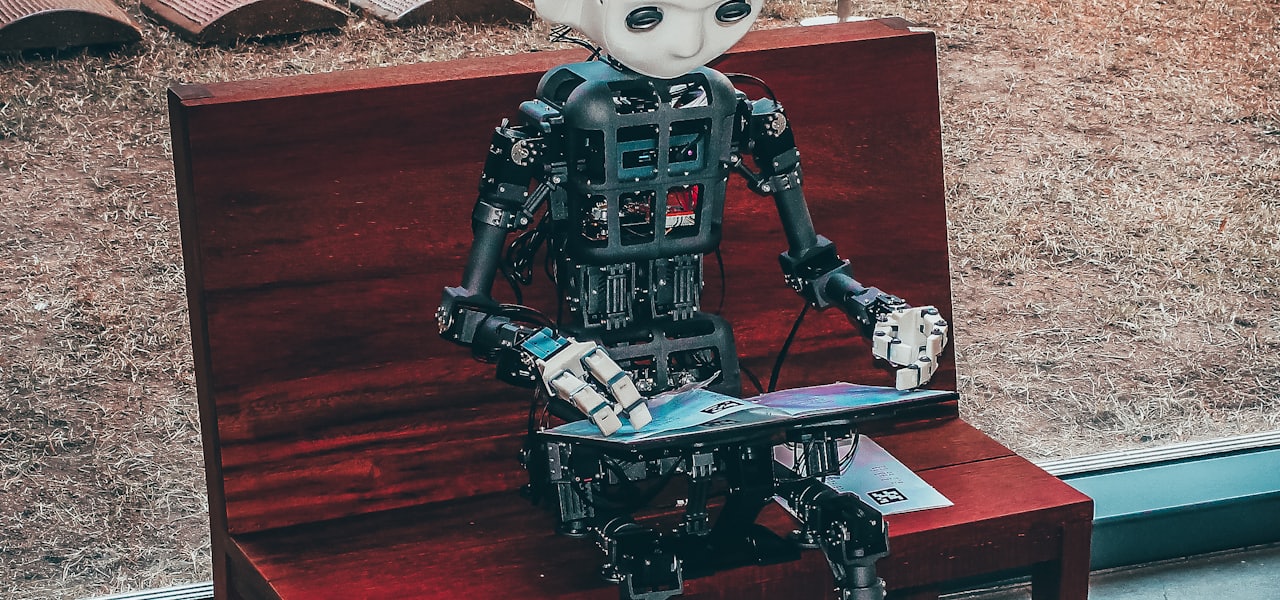
Neurorobotics is the combined study of neuroscience, robotics, and artificial intelligence. It is the science and technology of embodied autonomous neural systems. Neural systems include brain-inspired algorithms (e.g. connectionist networks), computational models of biological neural networks (e.g. artificial spiking neural networks, large-scale simulations of neural microcircuits) and actual biological systems (e.g. in vivo and in vitro neural nets). Such neural systems can be embodied in machines with mechanic or any other forms of physical actuation. This includes robots, prosthetic or wearable systems but also, at smaller scale, micro-machines and, at the larger scales, furniture and infrastructures. Neurorobotics is that branch of neuroscience with robotics, which deals with the study and application of science and technology of embodied autonomous neural systems like brain-inspired algorithms. It is based on the idea that the brain is embodied and the body is embedded in the environment. Therefore, most neurorobots are required to function in the real world, as opposed to a simulated environment. Beyond brain-inspired algorithms for robots neurorobotics may also involve the design of brain-controlled robot systems. == Major classes of models == Neurorobots can be divided into various major classes based on the robot's purpose. Each class is designed to implement a specific mechanism of interest for study. Common types of neurorobots are those used to study motor control, memory, action selection, and perception. === Locomotion and motor control === Neurorobots are often used to study motor feedback and control systems, and have proved their merit in developing controllers for robots. Locomotion is modeled by a number of neurologically inspired theories on the action of motor systems. Locomotion control has been mimicked using models or central pattern generators, clumps of neurons capable of driving repetitive behavior, to make four-legged walking robots. Other groups have expanded the idea of combining rudimentary control systems into a hierarchical set of simple autonomous systems. These systems can formulate complex movements from a combination of these rudimentary subsets. This theory of motor action is based on the organization of cortical columns, which progressively integrate from simple sensory input into a complex afferent signals, or from complex motor programs to simple controls for each muscle fiber in efferent signals, forming a similar hierarchical structure. Another method for motor control uses learned error correction and predictive controls to form a sort of simulated muscle memory. In this model, awkward, random, and error-prone movements are corrected for using error feedback to produce smooth and accurate movements over time. The controller learns to create the correct control signal by predicting the error. Using these ideas, robots have been designed which can learn to produce adaptive arm movements or to avoid obstacles in a course. === Learning and memory systems === Robots designed to test theories of animal memory systems. Many studies examine the memory system of rats, particularly the rat hippocampus, dealing with place cells, which fire for a specific location that has been learned. Systems modeled after the rat hippocampus are generally able to learn mental maps of the environment, including recognizing landmarks and associating behaviors with them, allowing them to predict the upcoming obstacles and landmarks. Another study has produced a robot based on the proposed learning paradigm of barn owls for orientation and localization based on primarily auditory, but also visual stimuli. The hypothesized method involves synaptic plasticity and neuromodulation, a mostly chemical effect in which reward neurotransmitters such as dopamine or serotonin affect the firing sensitivity of a neuron to be sharper. The robot used in the study adequately matched the behavior of barn owls. Furthermore, the close interaction between motor output and auditory feedback proved to be vital in the learning process, supporting active sensing theories that are involved in many of the learning models. Neurorobots in these studies are presented with simple mazes or patterns to learn. Some of the problems presented to the neurorobot include recognition of symbols, colors, or other patterns and execute simple actions based on the pattern. In the case of the barn owl simulation, the robot had to determine its location and direction to navigate in its environment. === Action selection and value systems === Action selection studies deal with negative or positive weighting to an action and its outcome. Neurorobots can and have been used to study simple ethical interactions, such as the classical thought experiment where there are more people than a life raft can hold, and someone must leave the boat to save the rest. However, more neurorobots used in the study of action selection contend with much simpler persuasions such as self-preservation or perpetuation of the population of robots in the study. These neurorobots are modeled after the neuromodulation of synapses to encourage circuits with positive results. In biological systems, neurotransmitters such as dopamine or acetylcholine positively reinforce neural signals that are beneficial. One study of such interaction involved the robot Darwin VII, which used visual, auditory, and a simulated taste input to "eat" conductive metal blocks. The arbitrarily chosen good blocks had a striped pattern on them while the bad blocks had a circular shape on them. The taste sense was simulated by conductivity of the blocks. The robot had positive and negative feedbacks to the taste based on its level of conductivity. The researchers observed the robot to see how it learned its action selection behaviors based on the inputs it had. Other studies have used herds of small robots which feed on batteries strewn about the room, and communicate its findings to other robots. === Sensory perception === Neurorobots have also been used to study sensory perception, particularly vision. These are primarily systems that result from embedding neural models of sensory pathways in automatas. This approach gives exposure to the sensory signals that occur during behavior and also enables a more realistic assessment of the degree of robustness of the neural model. It is well known that changes in the sensory signals produced by motor activity provide useful perceptual cues that are used extensively by organisms. For example, researchers have used the depth information that emerges during replication of human head and eye movements to establish robust representations of the visual scene. == Biological robots == Biological robots are not officially neurorobots in that they are not neurologically inspired AI systems, but actual neuron tissue wired to a robot. This employs the use of cultured neural networks to study brain development or neural interactions. These typically consist of a neural culture raised on a multielectrode array (MEA), which is capable of both recording the neural activity and stimulating the tissue. In some cases, the MEA is connected to a computer which presents a simulated environment to the brain tissue and translates brain activity into actions in the simulation, as well as providing sensory feedback The ability to record neural activity gives researchers a window into a brain, which they can use to learn about a number of the same issues neurorobots are used for. An area of concern with the biological robots is ethics. Many questions are raised about how to treat such experiments. The central question concerns consciousness and whether or not the rat brain experiences it. There are many theories about how to define consciousness. == Implications for neuroscience == Neuroscientists benefit from neurorobotics because it provides a blank slate to test various possible methods of brain function in a controlled and testable environment. While robots are more simplified versions of the systems they emulate, they are more specific, allowing more direct testing of the issue at hand. They also have the benefit of being accessible at all times, while it is more difficult to monitor large portions of a brain while the human or animal is active, especially individual neurons. The development of neuroscience has produced neural treatments. These include pharmaceuticals and neural rehabilitation. Progress is dependent on an intricate understanding of the brain and how exactly it functions. It is difficult to study the brain, especially in humans, due to the danger associated with cranial surgeries. Neurorobots can improved the range of tests and experiments that can be performed in the study of neural processes.
Cloud Native Computing Foundation
The Cloud Native Computing Foundation (CNCF) is a subsidiary of the Linux Foundation founded in 2015 to support cloud-native computing. == History == It was announced alongside Kubernetes 1.0, an open source container cluster manager, which was contributed to the Linux Foundation by Google as a seed technology. Founding members include Google, CoreOS, Mesosphere, Red Hat, Twitter, Huawei, Intel, RX-M, Cisco, IBM, Docker, Univa, and VMware. Today, CNCF is supported by over 450 members. In August 2018 Google announced that it was handing over operational control of Kubernetes to the community. == Projects == Argo is a collection of tools for getting work done with Kubernetes. Among its main features are Workflows and Events. It was accepted to CNCF on March 26, 2020 at the Incubating maturity level and then moved to the Graduated maturity level on December 6, 2022. cert-manager provisions and manages TLS certificates in Kubernetes. It was accepted to CNCF on November 10, 2020, moved to the Incubating maturity level on September 19, 2022, and then moved to the Graduated maturity level on September 29, 2024. Cilium provides networking, security, and observability for Kubernetes deployments using eBPF technology. It joined the CNCF at incubation level in October 2021 and the CNCF announced its graduation in October 2023. containerd is an industry-standard core container runtime. It is currently available as a daemon for Linux and Windows, which can manage the complete container lifecycle of its host system. In 2015, Docker donated the OCI Specification to The Linux Foundation with a reference implementation called runc. Since February 28, 2019 it is an official CNCF project. Its general availability and intention to donate the project to CNCF was announced by Docker in 2017. CoreDNS is a DNS server that chains plugins. Its graduation was announced in 2019. Dapr, the distributed application runtime, provides APIs for building secure and reliable microservices and agentic AI systems. Dapr was donated to the CNCF in November 2021 and joined at incubation level. The CNCF announced its graduation in November 2024. Envoy: Originally built at Lyft to move their architecture away from a monolith, Envoy is a high-performance open source edge and service proxy that makes the network transparent to applications. Lyft contributed Envoy to Cloud Native Computing Foundation in September 2017. etcd is a distributed key value store, providing a method of storing data across a cluster of machines. It became a CNCF incubating project in 2018 at KubeCon+CloudNativeCon North America in Seattle that year. Falco is an open source and cloud native runtime security initiative. It is the "de facto Kubernetes threat detection engine". It became an incubating project in January 2020 and graduated in February 2024. Flux is an open source project for powering GitOps in Kubernetes clusters. It provides the GitOps Toolkit, a set of Kubernetes APIs that allow you to define how configuration source code is securely pulled into your cluster and deployed by popular Kubernetes manifests rendering engines like Kustomize and Helm. The most recommended source mechanism is the OCIRepository API, which provides enhanced security and benefits from container image tooling out there. Flux has also notification integrations with popular services like Prometheus Alertmanager, PagerDuty, Slack and so on. Flux has graduated in CNCF in 2022. Harbor is an "open source trusted cloud native registry project that stores, signs, and scans content." It became an incubating project in September 2019 and graduated in June 2020. Helm is a package manager that helps developers "easily manage and deploy applications onto the Kubernetes cluster." It joined the incubating level in June 2018 and graduated in April 2020. Istio is a service mesh technology. It was accepted by CNCF in September 2022 and graduated on July 12, 2023. Jaeger, Created by Uber Engineering, Jaeger is an open source distributed tracing system inspired by Google Dapper paper and OpenZipkin community. It can be used for tracing microservice-based architectures, including distributed context propagation, distributed transaction monitoring, root cause analysis, service dependency analysis, and performance/latency optimization. The Cloud Native Computing Foundation Technical Oversight Committee voted to accept Jaeger as the 12th hosted project in September 2017 and became a graduated project in 2019. In 2020 it became an approved and fully integrated part of the CNCF ecosystem. Kubernetes is an open source framework for automating deployment and managing applications in a containerized and clustered environment. "It aims to provide better ways of managing related, distributed components across the varied infrastructure." It was originally designed by Google and donated to The Linux Foundation to form the Cloud Native Computing Foundation with Kubernetes as the seed technology. The "large and diverse" community supporting the project has made its staying power more robust than other, older technologies of the same ilk. In January 2020, the CNCF annual report showed significant growth in interest, training, event attendance and investment related to Kubernetes. Linkerd is CNCF's fifth member project, and the project that coined the term "service mesh". Linkerd adds observability, security, and reliability features to applications by adding them to the platform rather than the application layer, and features a "micro-proxy" to maximize speed and security of its data plane. Linkerd graduated from CNCF in July 2021. Open Policy Agent (OPA) is "an open source general-purpose policy engine and language for cloud infrastructure." It became a CNCF incubating project in April 2019. OPA graduated from CNCF in February 2021. Prometheus is a cloud monitoring tool sponsored by SoundCloud in early iterations. In August 2018, the tool was designated a graduated project by the Cloud Native Computing Foundation. It is now a Cloud Native Computing Foundation member project. Rook is CNCF's first cloud native storage project. It became an incubation level project in 2018 and graduated in October 2020. SPIFFE is an open standard and framework for workload identity, much the same way that OAuth is an open standard and framework for human identity. It is built from the ground up to accommodate modern computing environments, which operate with systems scale and velocity (as opposed to human scale and velocity), while still maintaining interoperability with existing technologies like OAuth and X.509 Public key infrastructure. Unlike other identity standards, SPIFFE supports multiple credential types for a single identity, ensuring that the highly varied needs of production environments are consistently met without compromise. SPIFFE joined the CNCF as a sandbox project in 2018, was accepted to incubation in 2020, and graduated in 2022. SPIRE is an open source identity provider for workloads based on the SPIFFE framework. It is highly pluggable, and fills the attestation and issuance needs required by any workload identity solution. The plugin interfaces it exposes allows users to write integrations with in-house systems, build internal self-service portals, and more. It is a very powerful building block for issuing short-lived identity credentials to dynamic cloud workloads. SPIRE became a CNCF Graduated project in 2022. The Update Framework (TUF) helps developers to secure new or existing software update systems, which are often found to be vulnerable to many known attacks. TUF addresses this widespread problem by providing a comprehensive, flexible security framework that developers can integrate with any software update system. TUF was CNCF's first security-focused project and the ninth project overall to graduate from the foundation's hosting program. TiKV provides a distributed key–value database. Vitess is a database clustering system for horizontal scaling of MySQL, first created for internal use by YouTube. It became a CNCF project in 2018 and graduated in November 2019. Contour is a management server for Envoy that can direct the management of Kubernetes' traffic. Contour also provides routing features that are more advanced than Kubernetes' out-of-the-box Ingress specification. VMWare contributed the project to CNCF in July 2020. Cortex offers horizontally scalable, multi-tenant, long-term storage for Prometheus and works alongside Amazon DynamoDB, Google Bigtable, Cassandra, S3, GCS, and Microsoft Azure. It was introduced into the ecosystem incubator alongside Thanos in August 2020. CRI-O is an Open Container Initiative (OCI) based "implementation of Kubernetes Container Runtime Interface". CRI-O allows Kubernetes to be container runtime-agnostic. It became an incubating project in 2019. gRPC is a "modern open source high performance RPC framework that can run in any environment." The project was formed in 2015 when Google decided to open sou